Come prepared, but be ready to adapt.
Know your material and have an idea of where you want the session to go. An agenda is useful, but don’t be so attached to it that you miss what’s happening in the room.
Get to know the people in your group.
Some participants will happily fill every silence. Others need more time before they feel comfortable speaking. Part of your job is knowing when to ask the more talkative members to make some room, and how to bring quieter people into the conversation without putting them on the spot.
Pay attention to patterns in how people behave, and think about how you can build on each person’s strengths.
Learn to think on your feet.
People will bring things into a session that you couldn’t possibly have planned for. You can prepare for a lot, but not for everything. And that’s okay.
If you don’t know the answer to something, say so. You don’t need to pretend you have it all figured out.
Keep the group safe.
Make the ground rules clear from the beginning. One person speaks at a time. Everyone gets a chance to contribute. Boundaries need to be maintained throughout the work, not just explained during the first session.
Group dynamics can get complicated, and keeping a group on track isn’t always easy. But creating that sense of safety is a big part of the job.
Borrow ideas from other counsellors.
Ask colleagues what they use in their groups. Even when you have to follow a set programme, there’s often room to make it your own. A simple icebreaker or a quote to start the session can change the way people engage.
And keep learning from one another.
Ask to sit in on another therapist’s group, even if you’ve been doing this work for years. Invite someone to observe one of your sessions and give you feedback. Make use of supervision.
There’s always something you can learn from watching someone else work.
Pay attention to the energy in the room.
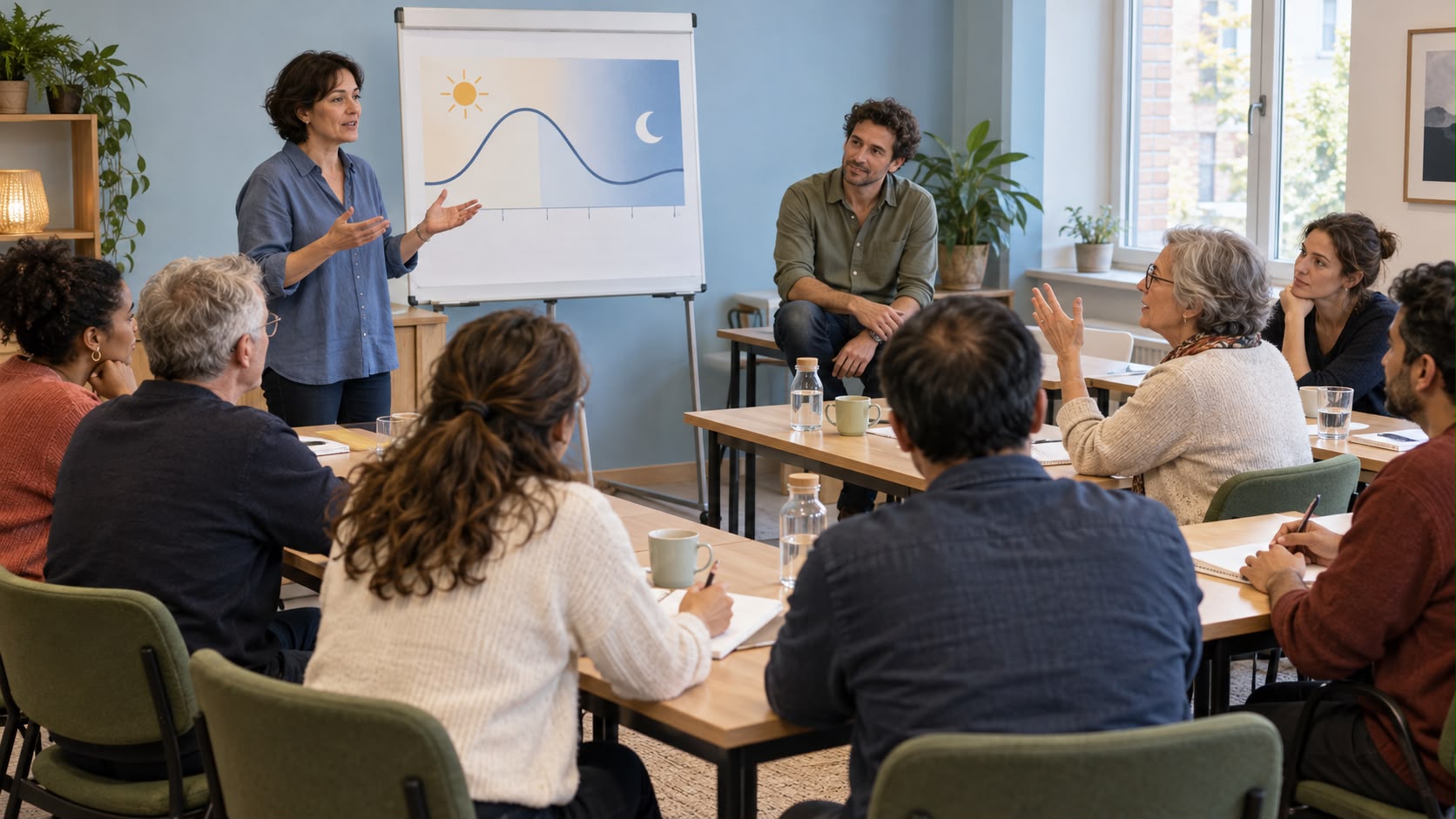
I once heard a therapist describe running groups just after lunch, when participants would come in feeling sleepy and sluggish. Instead of trying to push straight into the session, they’d spend a few minutes stretching together. To make it more fun, they’d ask a few participants to choose a stretch for everyone to try.
It’s such a simple idea, but it makes sense. Sometimes the group needs a change of pace before it can really engage.
And don’t be afraid to split into smaller groups.
A large group can be intimidating, especially for people who find it difficult to speak in front of everyone. Smaller groups can make it easier to join the conversation, share experiences and work together.
At the end of the day, group therapy is about giving people space to talk about what’s going on in their lives and connect with others who may understand what they’re experiencing.
A session can bring up a lot. As the therapist, you’re not there to do all the talking or steer every conversation towards a particular outcome. You’re there to observe, ask questions and guide the group when needed.
It takes practice to get comfortable with that role. It takes supervision, honest reflection and a willingness to learn from the sessions that don’t go quite as planned.
Group therapy isn’t easy, but it’s a skill you can develop.
If you facilitate groups, what’s one practical thing you’ve learned along the way that made a real difference?